What Instruments Are Used in Bachata Music?
You can recognize bachata within seconds, even before the singer reaches the first confession. A guitar sketches the melody. The güira fills the air with a metallic pulse. Bongos cut through the rhythm, while the bass gives every step somewhere to land.
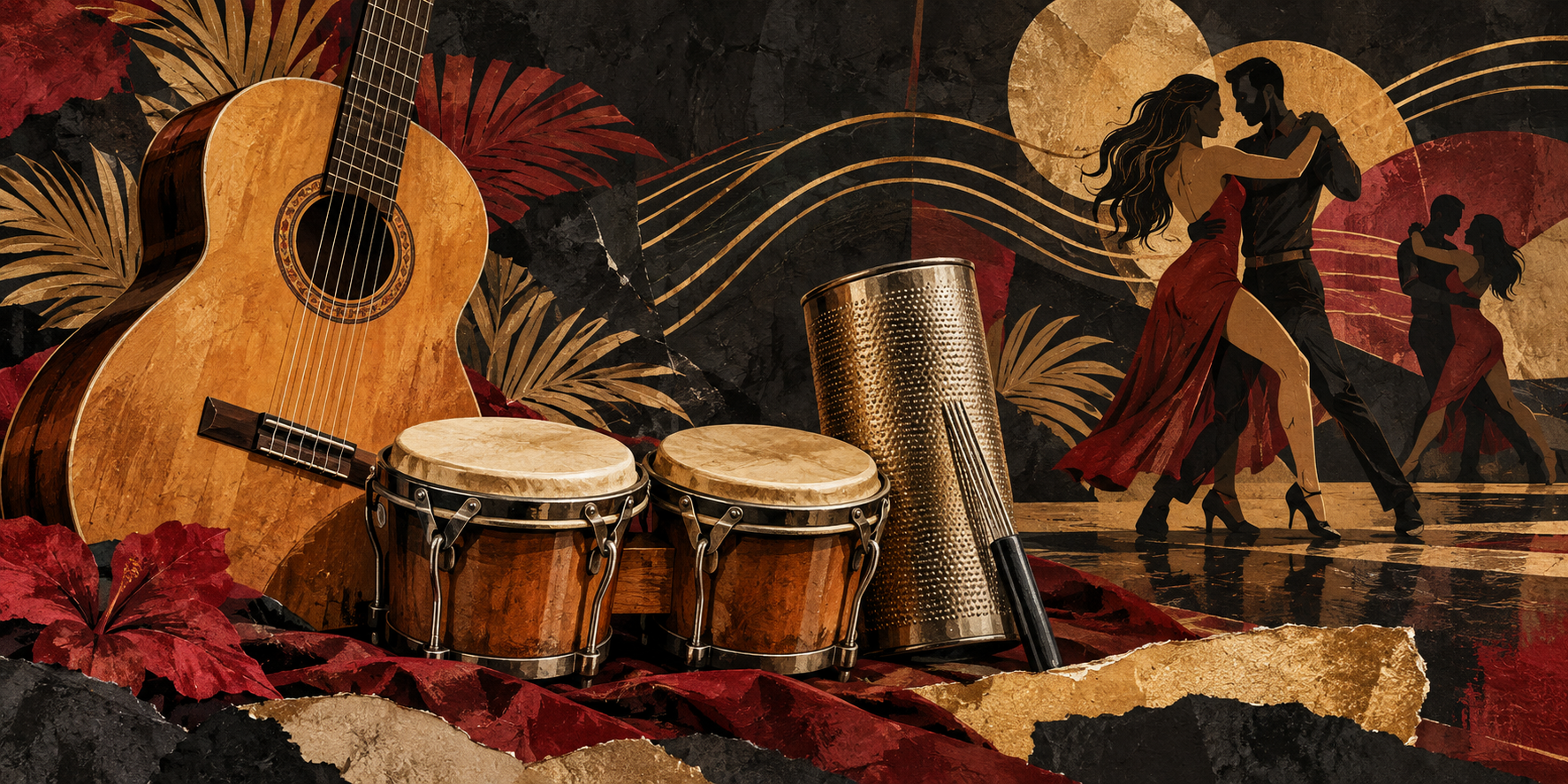
That chemistry is central to bachata, from traditional Dominican recordings to modern songs heard at dance socials around the world.
UNESCO describes the traditional bachata ensemble as a small group featuring one or two lead guitars, bongos, maracas, güiro and bass. Electric guitars are now widely used, but the conversation among strings, percussion and voice remains fundamental to the music.
The guitar tells the story
The guitar is usually the first instrument listeners notice in bachata. Its role is not limited to chords. One guitar can maintain the rhythmic foundation while another responds to the singer with melodic phrases, fills and introductions.
Listen closely to the space between vocal lines. That is often where the lead guitar becomes a second narrator. It may repeat part of the melody, anticipate the next section or answer an emotional lyric with a phrase of its own.
This relationship helps explain why bachata can feel intimate even when the arrangement is built for a crowded dance floor. The singer speaks, and the guitar seems to understand.
Bass gives the song its weight
The bass is less immediately obvious, especially through phone speakers, but it carries much of the song’s physical force. Its notes support the harmony while establishing the low foundation dancers feel beneath the guitars.
Try listening through headphones and following only the lowest notes. Notice how the bass marks changes between verses, choruses and instrumental sections. It does not need to dominate the recording. Its job is to make the rest of the ensemble feel grounded.
For dancers, that foundation can provide a dependable reference when the guitar becomes more decorative or the singer stretches a phrase.
Bongos create conversation
Bongos contribute sharp, compact percussion that can change character within a song. The pattern may remain controlled underneath a verse, then become more active when the arrangement opens.
Rather than hearing the bongos as a simple metronome, listen for variations in tone and intensity. Those changes add momentum without requiring the entire track to become louder.
Smithsonian Folkways recording credits offer real examples of this instrumental combination, identifying güira, bongos and bass in Dominican bachata recordings. The parts work as an ensemble rather than isolated layers.
The güira keeps the surface moving
The güira is a textured metal scraper played with a stiff brush or scraper. Its bright, continuous rhythm supplies one of bachata’s most recognizable sounds.
Focus on it for a full verse and you may hear the song differently. The güira creates motion between the larger accents, filling spaces that might otherwise feel empty. It can make a relaxed recording feel alive without rushing the tempo.
Together, güira and bongos create a detailed rhythmic surface. The bass sits beneath them, while the guitars move through and above the groove.
Traditional instruments, modern choices
Modern bachata does not abandon this instrumental identity. Producers may add synthesizers, programmed percussion, atmospheric effects or influences from R&B and urbano music. The balance can change from song to song, but the arrangement still works best when every layer has a purpose.
That distinction matters when discussing modern or sensual bachata. Production can alter a song’s mood, yet a polished sound does not erase the Dominican musical foundation underneath it. Listen for how the arrangement uses rhythm, guitar and voice to create movement.
Listening to Nandy Versátil through the ensemble
Nandy Versátil’s catalog offers several routes into that conversation. His five albums are FLOW Y PIKETE, LA MELMA, AHORA SIII, AHORA SIII – PART 2 and HOY SE BAILA.
The official presentation for HOY SE BAILA describes a seven-song album made with live musicians and rooted in bachata and merengue. That makes it a useful starting point for listeners who want to pay attention to instrumental interaction, not only the topline or chorus.
On your first listen, follow the guitar. On the second, concentrate on the percussion. Then return once more for the bass and voice. A song that initially felt simple may reveal several conversations happening at once.
That is the quiet sophistication of bachata. Every instrument has a distinct job, but the music comes alive when none of them stands alone.
Listen to HOY SE BAILA, then explore the rest of Nandy Versátil’s music. Visit the performance gallery to see the music shared with a dance community, and browse the official merch.