Are Bachata DJ Remixes Ruining the Genre or improving it?
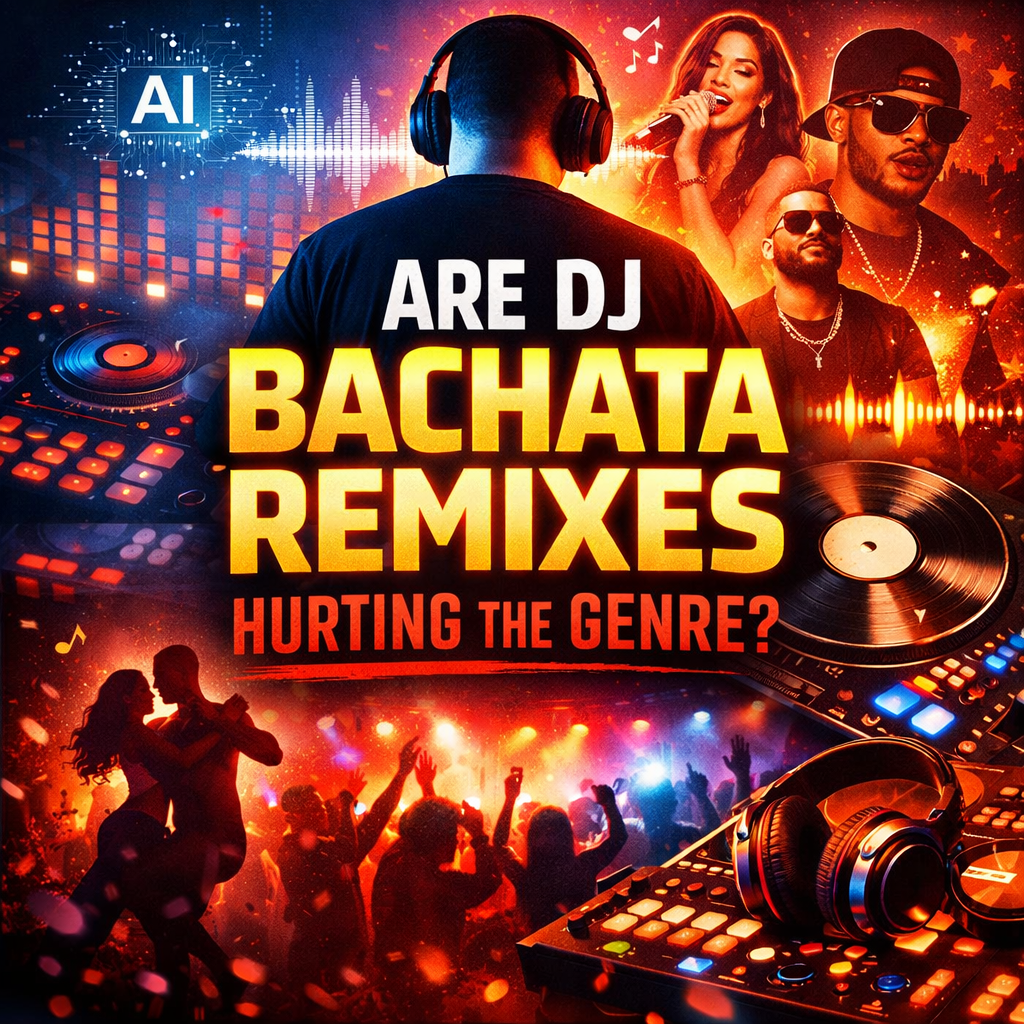
The Remix Revolution in Bachata
Bachata is evolving — and fast. DJs like Tronky, Manuel Citro, Husky, and others are pushing the genre in new directions. While traditional Bachata was often 120–130 BPM, emotional, and rhythmically consistent, many modern remixes now feature:
Slower tempos (105–115 BPM) for “smooth” social dancing
Vocals from famous artists in English and other languages
AI-generated music and instrumental tracks
Cross-genre covers, especially from reggaeton
Instruments and vocals that are sometimes out of beat
This raises a heated question: Are these practices enhancing Bachata or diluting it beyond recognition?
Slower Tempos — Innovation or Oversimplification?
Reducing tempos to 105–115 BPM is often intended to make songs easier for social dancers, but there are trade-offs:
Pros: Slower tempos allow for more sensual connection and intricate footwork.
Cons: Slower beats can remove energy and drive from the dance floor, making some remixes feel “flat” compared to traditional upbeat Bachata.
Fans in Europe and North America have praised this trend for accessible social dancing, but some purists argue it changes the feel of the genre entirely.
Cross-Language Vocals and AI-Generated Music
Modern DJ remixes are increasingly experimenting with:
Vocals in English, Spanish, or other languages layered over Bachata rhythms
AI-generated tracks or instrumentals, sometimes replacing live musicians
Reggaeton covers adapted to Bachata tempo
While this innovation attracts new audiences and club-goers, it also risks:
Over-reliance on automated production over human musicianship
Songs feeling mechanical, disconnected, or out of sync
Confusing dancers, who rely on phrasing and musical cues for performance
When Instruments and Vocals Are Out of Beat
One of the most controversial trends is misaligned vocals and instruments in DJ remixes. Some tracks have:
Vocal samples that don’t match the beat
Instrumentals that clash rhythmically with the melody
For professional dancers and choreographers, this can be frustrating, because Bachata relies on musical cues for connection, timing, and expression.
Cross-Genre Covers — Expanding Bachata or Diluting It?
Many DJs are remixing:
Reggaeton hits into Bachata-style arrangements
Popular English pop songs into social Bachata mixes
While this attracts non-Bachata audiences, critics argue it can shift the focus from authentic Bachata music to “club-ready” tracks, potentially eroding the genre’s core identity.
Artists that Stand-out
Artists like Nandy Versátil are creating a bridge between traditional and modern Bachata:
Songs like La Chucky (Mi Mami Chula) maintain authentic Bachata rhythms, while being remix-friendly
Kandela and Que Mala Noche allow DJs and dancers to experiment without losing musical integrity
This approach demonstrates that Bachata can evolve without losing its essence, even in the era of cross-genre remixes and AI-generated music.
📺 Watch La Chucky (Mi Mami Chula) here:
Innovation or Risk to the Genre?
DJ-led remixes are shaping the global sound of Bachata more than ever. While slower tempos, AI-generated music, and cross-genre experiments bring innovation and accessibility, they also raise serious questions:
Are DJs prioritizing danceability over musical depth?
Are AI-generated tracks replacing human artistry?
Will cross-genre adaptations change what Bachata sounds like for future generations?
The answer may depend on your perspective — and your connection to authentic, soulful Bachata. One thing is clear: the genre is evolving, for better or worse, and the conversation is just beginning.
💬 Your Turn: Do you think DJ remixes, AI tracks, and cross-genre experiments are revitalizing Bachata or hurting its roots? Join the debate in the comments below!
Written by: Nandy Versátil
All Rights Reserved © Nandy Versátil